


The Trappery LLC
Byblis liniflora ‘typical’
Byblis liniflora ‘typical’
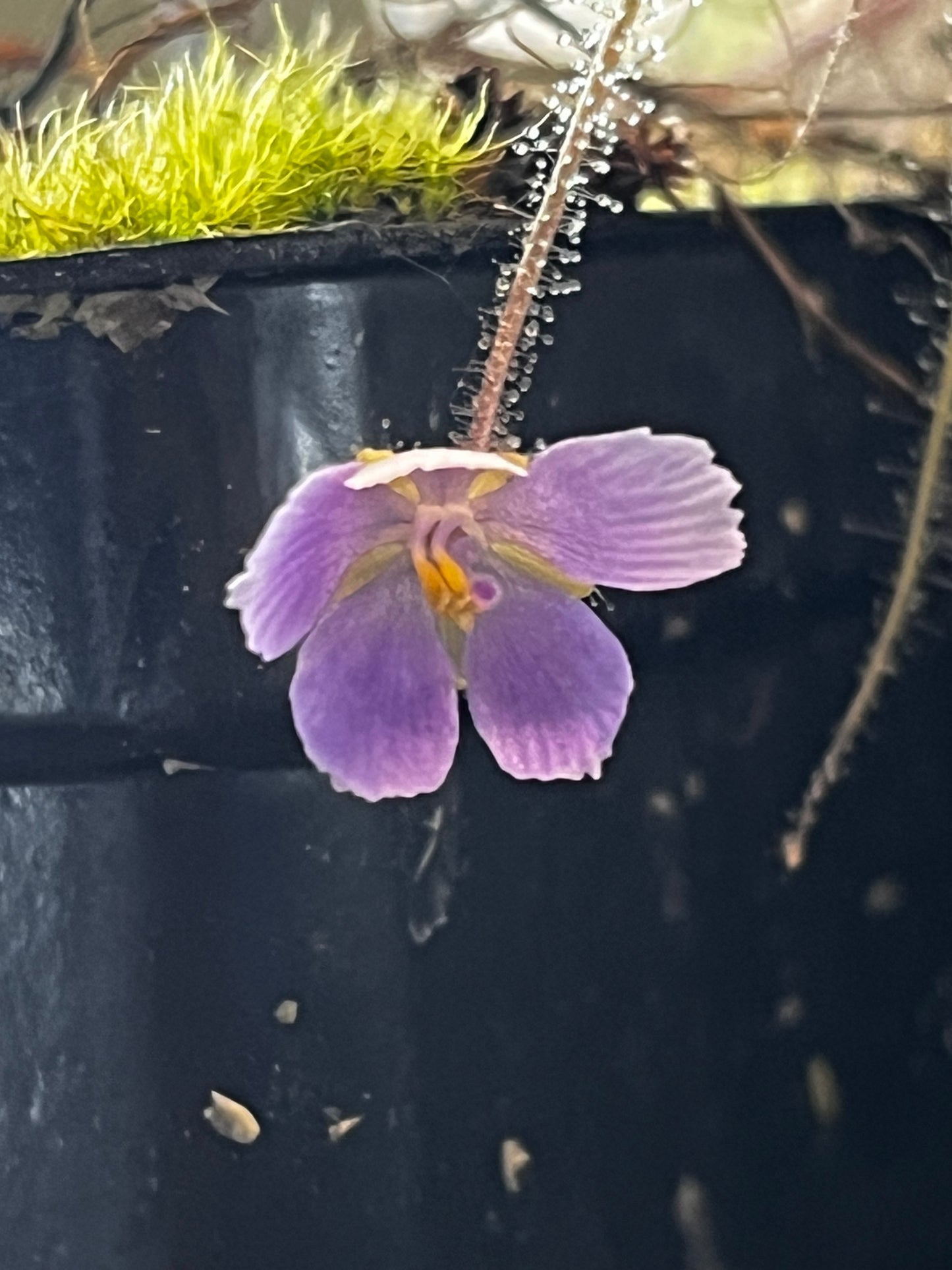
A delicate annual carnivorous plant valued for its fine foliage, consistent growth, and elegant violet flowers produced throughout the growing season.
Byblis liniflora is appreciated for its graceful form and dependable flowering habit. Plants develop slender, glandular leaves that glisten with mucilage and readily capture small insects. Under warm conditions with bright light, growth is steady and flowering can continue for extended periods.
- Experience Level: Beginner to Intermediate
- Light: Bright light to full sun
- Humidity: Moderate
- Temperature: Warm to warm-intermediate
- Growing Environment: Windowsill, greenhouse, or bright grow area
This species is typically grown as a fast-maturing annual. Plants respond well to consistent moisture and strong light.
Plants produce soft violet to lavender flowers above the foliage. Under favorable conditions, flowering begins early and can continue regularly through the plant’s life cycle.
Couldn't load pickup availability


Collapsible content
A Rainbow Plant Grow Guide
Often called rainbow plants, Byblis are delicate carnivorous plants recognized for their slender foliage and glistening droplets of mucilage that coat each leaf. Under bright light the plant appears almost dusted with dew, giving rise to the common name.
Though they resemble sundews at first glance, Byblis belong to a different botanical lineage and follow their own rhythm in cultivation. Most species grow quickly, produce a succession of soft violet flowers, and complete their life cycle within a single growing season.
In habitat these plants occupy open, nutrient-poor soils in Australia where seasonal rains allow them to germinate, grow, and set seed before conditions become harsher. This natural cycle explains their rapid development and dependable flowering when grown under warm, bright conditions.
Key Care Requirements
Light
Byblis benefit from strong light and open exposure.
Ideal conditions include:
• Bright greenhouse light
• A sunny windowsill
• High-output grow lights
Plants grown under strong light develop:
• Compact growth
• Strong mucilage production
• Consistent flowering
Insufficient light often results in elongated, weak growth.
Water
Byblis prefer consistently moist media, though they benefit from good drainage.
A typical approach is:
• Keep the soil evenly moist
• Avoid allowing the media to dry completely
• Avoid stagnant water around the base of the plant
Many growers maintain shallow trays of water during active growth, allowing the tray to dry briefly before refilling.
As with most carnivorous plants, use low-mineral water such as rainwater, distilled water, or reverse osmosis water.
Soil
Byblis grow well in open, low-nutrient media.
Common mixes include:
• Peat moss and perlite
• Peat moss and sand
• Peat moss and pumice
The goal is a medium that:
• Retains moisture
• Drains freely
• Contains minimal nutrients
Avoid fertilized soils or compost-rich mixes.
Temperature
Most commonly cultivated Byblis species prefer warm conditions.
Typical ranges:
• Day: 70–90°F (21–32°C)
• Night: 55–70°F (13–21°C)
Plants tolerate warmth well provided they receive adequate light and moisture.
Feeding
Like other carnivorous plants, Byblis capture small insects with sticky glandular leaves.
In cultivation, feeding is rarely necessary. Plants grown outdoors or in greenhouses generally capture sufficient prey naturally.
In indoor settings, occasional small insects may improve vigor but are not required.
Flowering and Seed Production
One of the most appealing characteristics of Byblis is their reliable flowering.
Under good conditions, plants produce:
• Numerous violet or lavender flowers
• A steady succession of blooms
After flowering, seed capsules develop and mature quickly.
Allow capsules to dry fully before collecting seed.
Because many species are annuals, maintaining a small seed supply ensures the next generation of plants.
Germination
Many Byblis seeds benefit from treatments that mimic natural environmental cues.
Common methods include:
• A brief soak in gibberellic acid (GA₃)
• Exposure to smoke-infused water
• Light scarification
Seeds are typically sown on the surface of moist media and kept warm and bright.
Germination can occur within several weeks under favorable conditions.
Common Challenges
Leggy growth
- Usually caused by insufficient light.
Sudden decline late in the season - Often normal for annual species approaching the end of their life cycle.
Poor germination
- May improve with GA₃ or smoke treatment.
Final Notes
Byblis reward growers who provide:
• strong light
• consistent moisture
• open growing media
While they may appear delicate, these plants grow quickly and reliably when conditions are stable.
For many growers, Byblis become a seasonal highlight. Elegant plants that combine unusual form, frequent flowers, and the quiet fascination shared by all carnivorous species.